Wednesday, 14 November 2018

Acts of kindness: another way of saving our planet

The Australian Kindness Movement defines an act of kindness as “a spontaneous gesture of goodwill towards someone or something – our fellow humans, the animal kingdom and the kingdom of nature”. It also says that “when we carry out an act of kindness it is a message from one heart to another, an act of love, an unspoken “I care” statement”.

We can be kind to others and help them when the need arises, we can be kind to the planet by looking after it, and we need to remember to be kind to ourselves through acts of self-care.

I have found a number of useful resources to inspire us to engage in acts of kindness, and these are outlined below.


An International Network: Bucket Fillers

Bucket Fillers is based on the idea that “we all carry an invisible bucket in which we keep good thoughts and feelings. When buckets are full, we are happy. When they are empty we are sad.” We can fill our own buckets by doing kind things for others and helping them to feel good. Others can also fill our buckets by doing the same things to us. However buckets can be depleted or “dipped” by doing or saying hurtful things to others, or having others do hurtful things to us.

There are many good resources on this website, including story books and work sheets and, although most are aimed at children, there is a simple universal message for all ages.

The Bucket Fillers Website can be found here:


An Australian Network: Australian Kindness Movement

This website is aimed more at adults and contains an abundance of ideas and stories about acts of kindness. It also organises an Act of Kindness Day on 6th November each year, and 16 Days of Kindness around this day.

The Australian Kindness Movement Website is:

A children’s book:  Because Amelia Smiled

I love this book by David Ezra Stein. It has colourful sketchy illustrations and outlines the ripple effect of Amelia smiling as she walks down the street, inspiring her neighbour to bake cookies for her grandson in Mexico, who shared them with his class and taught them a song about cookies ... which then inspired one of the students to make a video … which was then seen by a ballet club in England, who added some new moves to their goodwill recital in Israel, inspiring a 4 yr old to dance for his baby brother, who then slept thought the night … and so it continues.

More information about this book can be found here:
https://www.booktopia.com.au/search.ep?keywords=because+amelia+smiled&productType=917504


Two books full of ideas: Snail Mail and Care Packages

Michelle Mackintosh is the author of both of these beautifully presented books. Snail Mail encourages us to bring back hand written communication and gives many examples of kinds of letters to write, but also instructions on how to make paper, envelopes, and handcrafted stationary. She advocates for a slow communication revolution.

In her follow up book Care Packages, she inspires us with ideas and instructions for making beautiful and thoughtful packages for a variety of situations and occasions.

More information on Snail Mail can be found here:

And information on Care Packages here:

The happiness of life is made up of little charities -- a kiss or smile, a kind look, a heartfelt compliment. Samuel Taylor Coleridge

Remember there's no such thing as a small act of kindness. every act creates a ripple with no logical end. Scott Adams


Tuesday, 6 November 2018

Saving our planet: making beeswax wraps

I found a great book by Erin Rhoads, called Waste Not and have been inspired by her gentle non-preaching style to implement ways to reduce my use of plastics. One of her suggestions is to make your own beeswax wraps to replace the usage of Cling wrap/ Plastic Wrap. I found that these were quite simple to make, with my major challenge being to find a source of beeswax.
More information on her book can be found here:


Making beeswax wraps

Find some cotton fabric (as synthetics are damaging the planet). Patchwork supplies are a good place to start, but I actually found the lemon print fabric on special in the dress section of Spotlight. You may cut it to any size that is suitable, but I chose to cut squares 12 inches x 12 inches (30 cm x 30 cm) and 8 inches x 8 inches (20cm x 20cm).


Hem a narrow double fold hem around the edges (or overlock, or trim with pinking shears), and then wash the cloth and dry it so that it is clean for using on food. It may also need to be ironed after washing and drying.


Grate some beeswax. Erin suggests 70g (1/2 cup) for the 30cm x 30 cm cloth, but I found that Morag Gamble’ s suggestion of using 10g and ¼ teaspoon of coconut oil produced softer wraps. I find that it is a good idea to have a separate grater just for grating beeswax, and grating more than I need saves time next time (I keep the surplus in a glass jar).


Erin then describes placing the cloth (sprinkled with the grated beeswax) between sheets of baking paper, lining a tea towel, and then running a hot iron over the top for about 5 mins (until the wax has melted). This produces a nice wrinkle free cloth.

 However I found Morag Gamble's method of wrapping the cloth around the grated beeswax and coconut oil and heating this in a sandwich press for 1 minute, to be much easier (I decided to add a wrapping of baking paper around the cloth parcel to protect the sandwich press). This does, however, leave the finished cloth with fold marks initially.
Morag’s method can be found here:


Let the cloth cool (be careful removing it from the sandwich press, as I found that hot melted beeswax dripped from the ends of the baking paper if I didn't pull the edges up. And you're done! After use wipe over with cool water (hot may melt the wax).

Ways of using the wraps

There are some good examples of ways to use these wraps on this YouTube clip:

https://www.youtube.com/watch?v=9yJAG2UB7NY

Remember: this is one small step to help protect our beautiful oceans, and each small step does make a difference.


Sunday, 28 October 2018

Grief and loss in relation to childhood abuse

Any form of childhood abuse results in losses, and there comes a time when these losses need to be acknowledged and grieved for, in order to begin to heal from them. There are some tasks that can help us to do this, but do not hurry any of them. It is wise to take all the time needed on each step before moving on to the next.


Externalise the story

This is an important first step. It is therapeutic to offload the story instead of keeping it internalised, and once it is out there we can begin to process it. Externalising can be done simply by writing out the story or telling it to someone who is supportive and understanding. It can also be done diagrammatically or through works of art.


Identify the losses

Taking time to reflect on the losses and to name them is the next step, and it can be helpful to list these. Losses include feeling abandoned, being unable to express feelings, not having been parented well, feeling that the world is not safe, not being comfortable in relationships, needing to take time to deal with the impacts and thus disengaging from living, loss of respect, loss of trust, not experiencing unconditional love from parents, loss of innocence and of childhood, lost opportunities, loss of pleasure … and many others.


Grieve for the losses

Tap into feelings now, especially any that had to be repressed in childhood, and find a source of comfort. Feelings need to be honoured and externalised, and comfort is an important part of grieving.


There is more to the story: the gains

After having taken these steps, I found it useful to write a list of the losses and then, for each one, try to find a gain. I chose to write these in a journal so that I could refer back to them. Here are some examples:
Losses
Gains
Missing school
Developed good study skills
Lack of being nurtured and cared for
Learnt to self-nurture and to care for others
Lost help
Learnt self-help and to seek it
Time taken up managing anxiety
Developed a whole range of useful management techniques and shared these with others
Loss of dignity and respect
More open to serving others rather than seeking status
Loss of confidence in self
Finding ways to re-build this and to share this with others who are struggling
Loss of play in childhood
Developed a love of reading and creating
Loss of privacy
Learnt to value privacy and confidentiality
Feeling abandoned
Sought friendships with others and learned not to abandon my own children and grandchildren
Time taken struggling to heal
Became stronger and more insightful


Re-telling the story

Having identified the gains, it may be useful to re-write/ re-tell the story and include the gains as part of the story (a bit of a narrative type approach). This makes a more rounded story and allows us to see that strengths can come from adversity.


Remember: Owning our story and loving ourselves through that process is the bravest thing that we’ll ever do (Brene Brown LiveLifeHappy.com)


Tuesday, 16 October 2018

Looking sideways

Back in June 2014 I wrote in my diary that the sunrise this morning was a blaze of billowing red, but I had needed to look sideways to see it. How often we concentrate on the view ahead and miss something extra special when we don’t look sideways. This, of course, is another form of broadening our view and is also a metaphor for lateral thinking.


Being enriched in the shades of grey

Black and white thinking is so limiting. It excludes allowing us to be enriched in the shades of grey, a place of no easy answers, but a place that is also less likely to result in simplistic solutions to complex problems – simplistic solutions that lead to many unexpected consequences and thus more problems.


Finding alternate ways of doing things

There is usually never only one right way to do something. Rather there are more likely to be many ways, and some may be more effective than others. If we stick to only one way (because it has worked) we may miss a better or easier way, because we have neglected to look sideways. Looking sideways may also result in us learning something new.


Seeing danger coming

If we don’t look sideways we may miss the approach of something dangerous. Remember the childhood mantra of look to the right and look to the left before we cross the road? Looking sideways can give us the chance to evade or prepare for the approach of something we need to protect ourselves from.


Finding unexpected delights and pleasures

Just as I would have missed a beautiful sunrise if I had not looked sideways, so we can pass by other enriching experiences without knowing, unless we keep gazing around to the sides as we travel our life journeys.


Counselling is often about helping others to look sideways

Many counselling theories and techniques have the ultimate goal of helping clients to see things from new perspectives. For instance Narrative Therapy is based on seeking alternate strength based stories, Solution Focused Therapy looks for exceptions and CBT seeks to change unhelpful thinking patterns into those which are more helpful. These are all forms of looking sideways.


Remember: If we spend all our time focused on the horizon, we may miss treasures that the waves carry to the shore. Rachael Magowan (www.rachaelmagowan.com)


Tuesday, 2 October 2018

Broadening our view: part two


There are a number of tools that I have found useful in assisting us in broadening our view, and three of these resources are outlined here.


Broadening Perspectives

The Conflict Resolution Network, in outlining this skill, uses the metaphor of climbing a mountain, to illustrate the need to see a problem from a range of viewing points, other points of view and wider perspectives. They also talk about:
  • becoming an observer, not just a participant
  • respecting and valuing differences in people and their viewpoints
  • looking at things in context
  • using a longer time-frame
  • identifying what you can and cannot change
Some basic questions to ask include:
  • Am I seeing the whole picture, not just my point of view?
  • What are the effects of this beyond the immediate issue (e.g. on other people or groups)?
  • Where might this lead in the future? 
More information on how to Broaden our Perspectives can be found at the end of the Conflict Resolution Skills outlined in this document:
http://www.crnhq.org/content.aspx?file=66138|45515x

A more detailed lesson plan on Broadening our Perspectives can be found here:
http://www.crnhq.org/files/66138/files/CR%2012%20Skills%20TM/PDFs/Q%2012.%20Broadening%20Perspectives%202nd%20Ed.pdf


The Parable of the Six Blind Men and the Elephant

Basically this story illustrates the value of putting different perspectives together to gain a more complete picture (of an elephant) rather than just seeing one part of it (e.g a leg, the trunk, a tusk, an ear, the tail or a side). The other message from this story is that all viewpoints were correct (just limited), but the men began to argue that they were right and others were wrong, even although they were all right.

The full story can be found here:

Or a YouTube version can be accessed here:


The Helicopter View

On the website getselfhelp.co.uk it is pointed out that sometimes we can be so close to something distressing that it is difficult to stand back from what is happening. At these times it may be helpful to zoom out our view and see the bigger picture i.e the Helicopter View. The higher the Helicopter flies, the bigger the picture and the less we are involved with the detail at ground level. Thus we can begin to see things from a broader view.

A worksheet on the Helicopter View can be found here:


Something to think about: When we numb darkness, we numb the light. (Brene Brown)


Thursday, 27 September 2018

Broadening our view


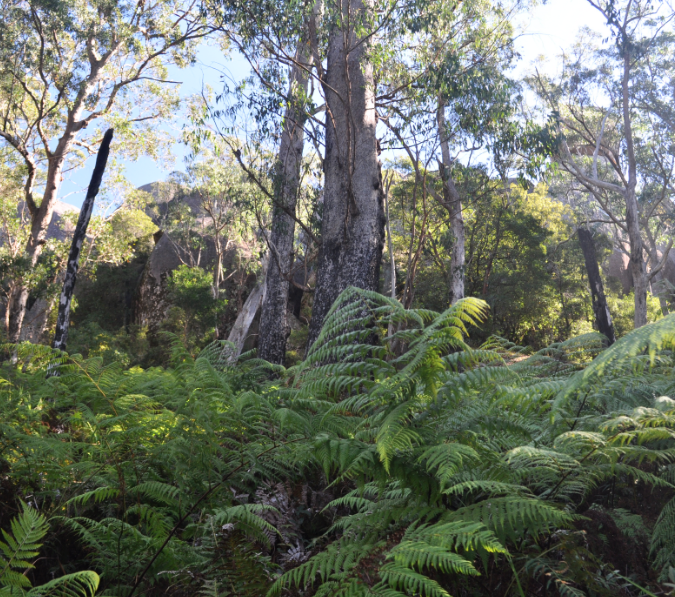
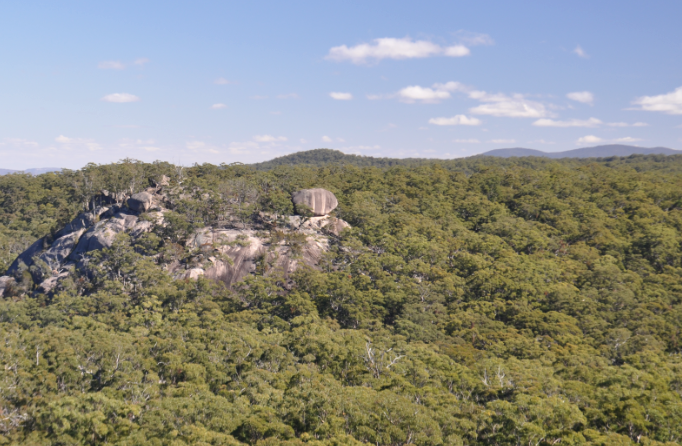
In June we visited Woolloolni Woolloolni Aboriginal Place in Basket Swamp National Park and walked to an outcrop of huge granite boulders – a sacred site. This experience taught me a number of lessons about broadening my view.


It is worth seeking directions

We had visited this National Park last year, but failed to locate this Aboriginal Place, based on our limited directions. However this time we visited the Tenterfield Visitor’s Information Centre beforehand, and found an information sheet that both enriched our experience and led us to our destination.

Life is like this too – sometimes we can get away with flying blind, but often having more information can broaden both our viewpoints and our life experiences.


Look up, not just down


We followed an overgrown track to a granite outcrop, which we were unable to see through the dense forest from the carpark, and whilst concentrating on searching for the walking track. The track required careful placement of our feet, and we were unable to see the outcrop until we were nearly upon it. Ferns and other native vegetation brushed our legs as we walked.. However, after we had bush-bashed our way back to the car park, I looked back over towards the outcrop and could now see it through the trees as I looked up.

And I realised that we can miss things on our life journeys if we only look down, seeking the track or the next place to step. Lifting our gaze can also change our mood.


Enjoy the richness of complexities

The sacred site was a large balancing rock dominating the outcrop, and this had been given different names by European and Aboriginal peoples. Hewitt, when exploring in 1840/41, had simply named it Wellington’s Lookout because he thought that it resembled the hat worn by Wellington at the Battle of Waterloo (a quick European interpretation and naming).

By contrast the Aboriginal people have woven much more complicated and meaningful legends around it, which relate to its formation and significance to the landscape. Their creation story believes that Woollool Woollool (a Wuyangali, or “clever man”) had exclusive rights to this rock, a centre of spiritual power, but when he died his spirit returned to this place and caused a rock on top of the present balancing rock to fall off. This indicated that his spirit had returned, and it would now be safe for anyone to approach the site. (Reference: Tenterfield and District Visitor’s Association Information Sheet: Woollool Woolloolni).

Seeking deeper meanings can also broaden our perspectives. 


Look from a different perspective

On our way out of this area, we detoured up Timbarra Trig Road, parked on the edge of a hill, and walked a short distance up to another outcrop of granite, where we scrambled between boulders and onto rock platforms for extensive views over Tenterfield and the ranges beyond. To the east we could clearly see the Woollool Woolloolni outcrop, rising above the skirt of its vegetation.


Sometimes in life too, it is helpful to move away from closeness to issues and challenges and view them from a distance and/ or see them in their broader surroundings. 


Remember: If you don't like where you are, just picture where you want to be. (From "Touched by an Angel TV series).


Thursday, 30 August 2018

"Victim" and "Survivor" as Labels

In her book Beyond Survival: Living Well is the Best Revenge, Yvonne Dolan talks about stages in healing from abuse, the first being as a "Victim", the second as a "Survivor", and the third "Being your Authentic Self". She points out that people who have experienced abuse can become stuck when they label themselves as "Victim" and "Survivor", and encourages them to keep moving on into the third stage, so that life can be lived and enjoyed more fully.

This is not to say that being a victim or survivor is not valid, but it is better not to use these as labels that stick. She names tasks that need to occur in each of the three stages.


Victim Stage

Tasks in this stage include:
  • facing the reality of the bad things that have happened
  • tapping into feelings that go with this and letting out (expressing) these feelings
  • knowing that it is not your fault (let go of self-blame and shame)
  • finding the courage to tell someone else what happened (to overcome isolation, fear and shame)


Survivor Stage

Tasks include:
  • beginning to see that the bad things are in the past and that you have lived beyond them
  • asking yourself "how did I do this?" and "how was I able to survive this?"
  • identifying the things that allowed you to survive, including internal strengths, external resources, positive personality characteristics (these may have already existed before the trauma, or been developed after it)
  • being able to function productively again in everyday life


Being your Authentic Self

Our Authentic Self is a Sanctuary deep within us where we can heal our wounds, delight in being alive and feel safe and solid in the storms of life.
Tasks include:
  • seeing survivor-hood as a significant aspect of self but not your total self, and celebrating it
  • stopping seeing life through the window of survivor-hood
  • giving up the labels of "Victim" and "Survivor"
  • creating a rewarding and satisfying life for yourself now
  • beginning to live according to the person you really are deep inside
  • having hopes and dreams becoming stronger than past expereinces
  • enjoying life to the fullest
  • reaching towards your potential
  • expressing yourself in personally and rewarding creative ways
  • expressing all the gifts you were born with
  • trusting your own knowledge and abilities
  • feeling more secure with yourself
  • being less willing to squander your time and energy on relationships or situations that are abusive or toxic for you


Healing is not linear

Whilst it may be helpful to talk about stages of healing, in fact, healing from abuse does not occur in neat stages, and we may find ourselves oscillating between them. Things like guilt, unhelpful comments from others, triggers and reminders, and needing to go back into survival mode where we need to keep our guard up, may send us temporarily back into victim mode, even although we have moved on. However re-labelling ourselves as a "Victim" is unhelpful and limiting.

Similarly, aspects of our authentic selves may be present in other areas of our lives even when we are engaged in victim or survivor related tasks. This may be e.g. when we are able to laugh at ourselves and our mistakes, when we have the courage to leave uncomfortable situations, and/ or when we trust in ourselves and our abilities.


A great resource

Yvonne's book is currently available as One Small Step: Moving Beyond Trauma and Therapy to a Life of Joy:

https://www.booktopia.com.au/one-small-step-yvonne-m-dolan/prod9780595125357.html

It is full of exercises to help us connect with our authentic selves.

Remember: I survived what happened to me but its not who I am now. 

It's part of me but not all of who I am.