Showing posts with label Covid 19. Show all posts

Saturday, 2 October 2021

The prayer of St. Frances de Sales

 During these tumultuous and challenging times, I have found this prayer to be a source of comfort and strength, and would like to share it both in its original form, and in an adaptation by Maria Gullo in her guided meditation on the Insight Timer App.

The original prayer

Do not look forward in fear to the changes of life;
rather look to them with full hope as they arise.
God, whose very own you are, 
will deliver you from out of them.
He has kept you hitherto,
and He will lead you safely through all things;
and when you cannot stand it,
God will bury you in His arms.


Do not fear what may happen tomorrow;
the same everlasting Father who cares for you today
will take care of you then and every day.
He will either shield you from suffering,
or will give you unfailing strength to bear it.
Be at peace, and put aside all anxious thoughts and imaginations.


Maria's adaptation

Do not look forward in fear and anxiety to the challenges and chances of this life;
they are inevitable.
Rather look forward in hope with full confidence, 
that as changes and challenges arise,
God, to whom you belong
will in His love enable you to profit by them,
and will deliver you, for God is your keeper.
God has guided you up to this point in your life,
and he will continue to lead you safely through all things,
including all trials and triumphs.
And when you cannot stand
God will bear you in His arms.
So release your grip on worry
and hold tightly to the hands of God,
who is safely leading you.


Do not look forward in fear to what may happen tomorrow,
for the same everlasting God who cares for you today
will take care of you tomorrow,
and every day after.
God will either shield you from suffering,
and when it is necessary,
God will give you unfailing strength and courage to bear it.
Therefore put aside all anxious thoughts and imaginations
and be at peace,
for Grace abounds to you in this very moment
and all the moments in your life.


Remember: Live quietly in the moment and see the beauty of all before you. The future will take care of itself. Yogananda.


Tuesday, 31 August 2021

The thing that you have dreaded has now come to pass

 In Central West NSW we have had relatively few positive cases of Covid 19 until now, but all this has changed almost overnight. In our local town there are, of today, 9 cases and some have been infectious in the community. Testing numbers are alarmingly low and the threat has become very real. It has also been quite difficult to obtain Covid Vaccinations locally until last week, with overstretched and inadequate GP services being the only sources. My husband and I chose to travel 125 kms to another town back in May to obtain our first AstraZeneca dose and had to do the same just over a week ago for the second dose, before the two local Pharmacies and an ADF pop-up clinic came on line last week.


Context

In some ways, with our focus on achieving and maintaining zero cases in Australia, we have been taught to be terrified of Covid 19 rather than to learn to live with it, and now in NSW we are facing the new reality of having to undertake a complete mind shift towards learning to live with it. This involves grieving for what we have lost, whilst realising that in the real life of a world pandemic, we could not continue to remain free and closed off from the Virus, the rest of the world, and other States within Australia. 


Allow reactions 

The past two years have seen us face trauma after trauma, with one horror being replaced by another, before having time to absorb the reality of the first. Bush fires on top of drought, a sickening mouse plague, and all of the tragedy and changes that Covid 19 has thrown at us.

So there are times when we have needed to pause and allow ourselves to react, to grieve, to become angry at injustice, to identify a sense of panic, and to offload our feelings/ have melt-downs. Suppressing, bottling up and denying reactions is never helpful.


Fear of what may happen is harder to live with than reality

When we harbour fears about "what ifs" our minds are dealing with myriad imaginations and possibilities, whereas when the thing that we have feared actually arrives, there is only one reality to deal with, and we are no longer living in that state of anxiety which is about waiting for the axe to fall.


Survival mode and daily living

Living with the thing we have feared puts us into survival mode and a focus on the present, rather than fear of the future. Our lives and ways of daily living are much the same, whilst acknowledging the challenges and restrictions of lock-downs, apart from the risk taking involved when we need to leave home to undertake essential tasks. Life is essentially the same, and it is only our thoughts that are different.

Of course, I acknowledge that I am writing this from the perspective of someone who is retired and spending most of my time at home, and that for others time away from home will be more extensive and carry more risk.


Break the numbers down

Having watched the daily case numbers grow in NSW over the past months to a really alarming level, it can be easy to feel terrified. However a look at a Postcode heat map reveals that there are still many places with low or zero cases across NSW, even in Sydney. This new perspective is helpful when it all begins to feel too overwhelming.


Fresh air to clear the head

We need time to re-engage with meaningful living when going through such times, and a good way to clear our heads to do this, is to go out into the fresh air to walk, to sit, to refill our lungs, to view the sky, to engage with nature and to experience surroundings unaffected by Covid 19.


Remember: The most beautiful people we have known are those who have known defeat, known suffering, known struggle, known loss, and have found their way out of the depths. Elisabeth Kubler Ross


Thursday, 12 August 2021

Just do the next thing

 In current times it can be difficult to stay focused and motivated and, instead, we can just drift into letting days flow slowly past in a state of brain fog. When this happens, I have found it helpful to go into "just do the next thing" mode to maintain some sense of achievement in my days. The benefits of this can be as follows:


It doesn't matter how long a task takes

This approach allows us to just continue on with something, taking as long as we need to do each step, with each step becoming the next thing to do. It is surprising how much gets done, as it encourages us to remain active.


It reduces procrastination

Because we are actually doing something, we move on from procrastination, and have some aims and goals to achieve.


The pressure is taken away

Instead of feeling overwhelmed, we can steadily work through one task after another at a pace that suits us. It is interesting how just writing a "to do" list and crossing a couple of things off can make us feel less pressured, even if there are many more tasks listed. 


Anxiety is reduced

Being active reduces the unhelpful chains of thinking produced by anxiety, as does the sense of achievement as each task is completed. Our thoughts can re-focus on the task instead of random, uncontrolled thoughts and worries.


Regular routines can be incorporated

These can become part of the tasks we do one at a time, as we "just do the next thing" that needs to be done.


Or we can just stay in randomness 

If structure is too difficult because of where our mind-state is at, it is possible to just do one task and then just find another after it is completed, without any pre-defined plan. The secret is just to keep active.


A caution 

It may be necessary to have a background "to do" list to refer to from time to time, so that some important tasks are not forgotten.


Remember: Every morning brings new potential, but if you dwell on the misfortunes of the day before, you tend to overlook tremendous opportunities. Harvey MacKay


Wednesday, 17 February 2021

Lessons from another river

 Having completed our following of the Murrumbidgee River, we had a yen to explore one closer to home.  Our journey along the Lachlan River began in November 2019 and is still continuing, due to interruptions from Covid 19, but in this post I want to concentrate on the headwaters of the River, before it reaches Wyangla Dam (or even half way to there).


Lesson one: Our suppositions about an experience will differ from the actual experience, always.

Despite having read some descriptions about this section of the Lachlan River, nothing prepared us for having to view its very beginnings from the back of an overgrown graveyard. 

In our lives, we can often imagine what an experience may be like, but it is not possible to know for certain, and we cannot anticipate emotions ahead. We may imagine a lot of possibilities, but when we get there, there will be only one way through the experience (despite a lot of possible "what ifs" beforehand). We certainly could not have imagined what being in lock-down or living through a Pandemic would be like until it actually happened, and I'm sure this is the case for many others.


Lesson two: Side tracks are worth exploring for ourselves, despite other people's opinions.

We followed every accessible side track to the River and found many interesting vistas and ways through, despite some tracks supposedly being closed and/ or inaccessible according to others (which proved not to be the case when we reached them).

Our life journeys are individual journeys, and different things will have different levels of importance to each of us, so we need to each choose our own side tracks, rather than allowing others to choose them for us, based on their opinions. 


Lesson three: Just because life seems dry, it does not mean we won't find enrichment if we take the time to look for it.

Having begun our journey along this River at the end of a drought year, we were surprised to find that it contained flowing water all the way along its infant course (we expected water holes at best).

If we spend our lives taking things at face value, we may miss some enriching experiences, merely because we have not looked deeply enough for them.


Lesson four: We need to do our own exploring, and not rely on the information of others.

The limited information we had about this section of the River proved to be very inadequate, and we found lots of lovely places by creating our own travel agenda. The most detailed travel article from a magazine was based on pursuing Clancy of the Overflow and, in the end, merely gave us an approximate location of the starting point of the Lachlan.

Information from others is always based on their perspectives (or even perspectives altered across time), so it pays to take the time to explore things for ourselves, and to find our own perspectives in our own time-frames.


Remember: It's a funny thing about life, once you begin to take note of the things you are grateful for, you begin to lose sight of the things you lack. Gemany Kent.


Saturday, 9 January 2021

When the walls start closing in

 Today I have read articles about how we are only at the half-way point of the marathon of living with Covid 19 and, in Australia, our hopes for a better 2021 have been dashed by new outbreaks and concerns about the new more contagious variant of the Virus. All of this can leave us feeling that the walls are closing in again, especially if we have been placed in lock-down or been told to isolate due to places we have unwittingly visited. It can feel a bit like groundhog day! 

However, these are some of the things which I have found helpful when I have felt the walls beginning to close in on me:


Looking out

Fear and anxiety can cause us to become stuck looking inwards at our own reactions, so if we can reach out towards others instead, this can change our perspective. Remembering that we are not alone, that the whole world (or even just our community) is in this together, finding mutual ways to support and comfort people we know, and having empathy for others, can all help us to look outwards instead of inwards.


Looking up

I love looking up at the skies (in all the diverse and constantly changing moods), and up into the canopies of trees, to places that are Covid 19 free, where birds continue to fly free without being weighed down by the problems of the earth. It is good to be reminded that there are worlds above our troubled existence.


Giving it to God

When it all becomes too much, I am reminded that there is a God who has this in His care, who is watching over us, and providing us with comfort, protection and strength, if we but reach out to Him. So many things are too difficult to control, make sense of, or resolve -- and these I put in my "too hard" basket, and then give it to God. We can also pray for others, no matter where they are, and recently I have discovered that it is helpful to pray through news bulletins. 


Changing deprivations and restrictions into acts of love

Earlier in the Pandemic I realised that practicing social distancing, wearing masks, sanitising hands and respecting the rules was actually about giving to others, rather than depriving ourselves. This can make a huge difference to living in fear (which is about looking inwards at ourselves) and is another way of re-focusing outwards.


Remember: Healing isn't about overcoming the pain; it's living despite it. Hannah Blum


Thursday, 15 October 2020

When it is difficult to feel gratitude: look for protection and provision

 I keep a gratitude journal, which I write in at the end of each day. However on some days it is a struggle to find things to be grateful for, and then I find that it helps to look for examples of protection and provision instead. It seems to be that gratitude is linked with a sense of happiness and positivity -- and some days it can be difficult to feel this -- whereas protection and provision is more feeling neutral.

23rd Psalm 

At the beginning of the pandemic I found lots of comfort in the 23rd Psalm and, as I read it, it occurred to me that it was all about protection and provision, the two things that I most needed.

The Lord is my Shepherd, (a Shepherd protects the sheep)
I shall not be in want. (promise of provision)
He makes me lie down in green pastures,
He leads me beside quiet waters, 
He restores my soul. (protection and provision)
He guides me in the paths of righteousness,
for His name's sake. (provision)
Even though I walk
through the valley of the shadow of death,
I will fear no evil,
for You are with me; (protection)
Your rod and your staff, they comfort me. (protection and provision)

You prepare a table before me
in the presence of my enemies. (protection and provision)
You anoint my head with oil;
my cup overflows. (provision)

Surely goodness and love will follow me
all the days of my life,
and I will dwell in the house of the Lord forever. (the ultimate protection and provision)

(NIV version of the Bible).


Protection

I found that by living life one day at a time, some days I know I am in a totally safe place at home, and I just need to remind myself of this when fears and anxieties creep in. However on days when I need to venture forth into the wider world, I might reflect that I was protected by e.g. shopping in an uncrowded supermarket, finding no-one else in the waiting room when I needed to go for pathology tests, people around me maintaining physical distancing in the pharmacy, and others wearing masks (a bit of a rare occurrence in our town, sadly) etc.


Provision

During the year, I have found abundant examples of this, ranging from the breaking of the drought (and our green pastures in which to rest), to vegetables and herbs growing in my garden, to finding scarce groceries in the supermarket, to having a storehouse of fabrics and sewing supplies and other resources to draw on, to finding on-line inspiring courses, to beautiful places to walk on our farm, to encouraging emails from friends and relatives, to comforting music, to living in Australia -- and so much more.

I have noticed that if I use the heading "Provision" in my gratitude journal on days when I am not feeling very grateful, I end up writing many things that I may have written as things to be grateful for on a better day.


Remember: Real empathy is sometimes not insisting that it will all be OK, but acknowledging that it is not. Sheryl Sandberg.


Tuesday, 6 October 2020

Covid 19: The many shades of grey

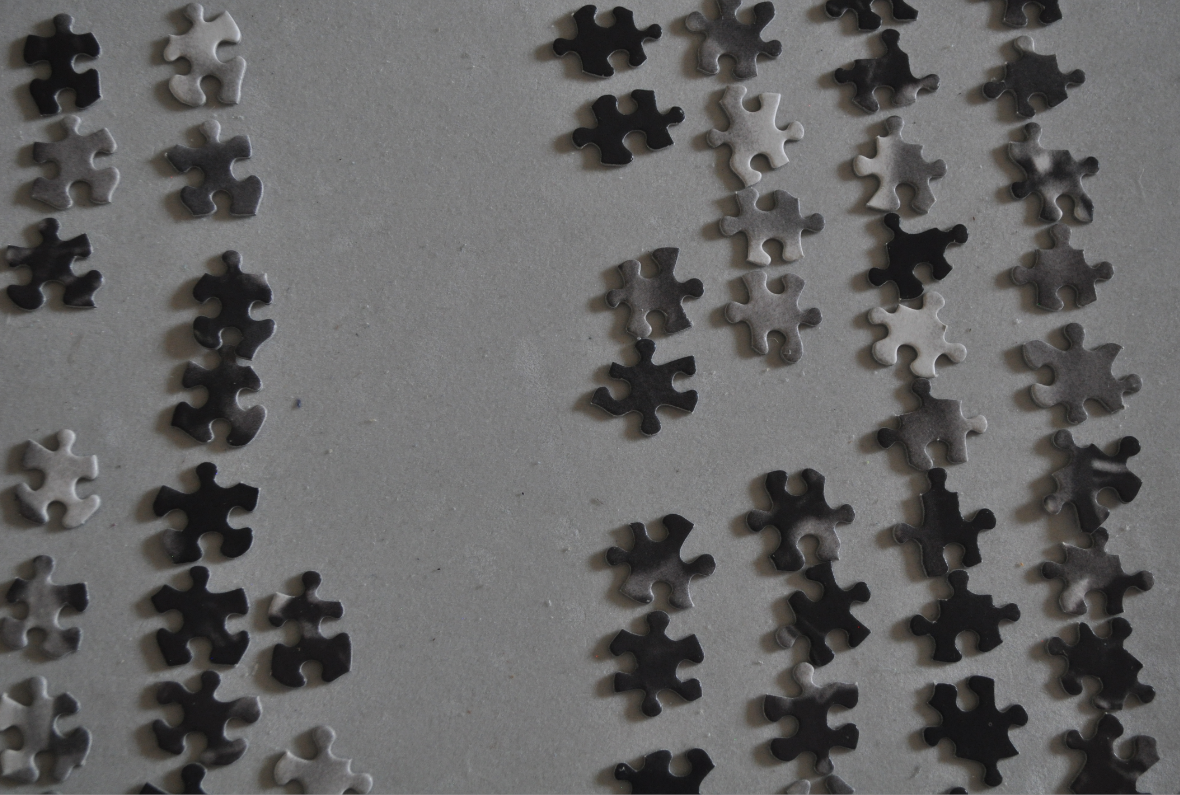
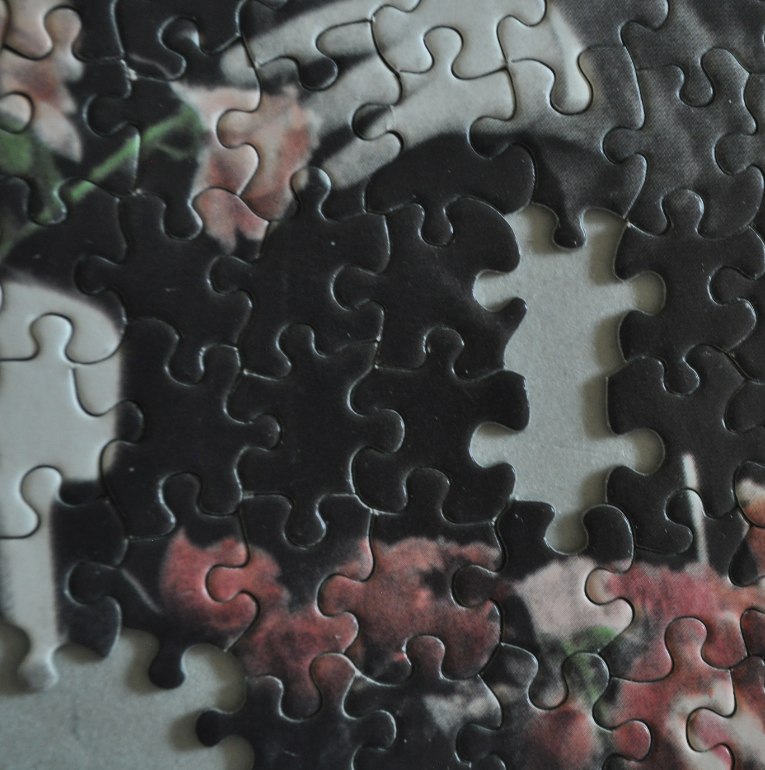
 As we navigate through this strange year where we cannot predict what tomorrow will bring, it occurs to me that we are living with shades of grey, when we would be more comfortable with black and white answers. Putting together a mostly black, white and shades of grey jigsaw had me reflecting on this as a metaphor for this year.

Black and white is easier to see

Just as the black and white pieces tend to stand out from the grey ones in the puzzle, so do the black and white facts about this Virus. However even some of the black and white puzzle pieces still have tinges of grey, and so does the Virus -- some of the seeming facts change as more is learnt and we are given new advice (in Australia this occurred with the wearing of masks).


Sometimes it helps to focus on small details

When it all becomes too much, honing in on putting together a smaller detail can help in struggling with the puzzle. This can help too when we feel overwhelmed with the magnitude of the Virus -- some days we need to just live in our safe bubble and concentrate on doing the things we can do.


Sometimes we need to seek order in overwhelming chaos

At one stage of my struggle to put the puzzle together, I chose to line up rows of similarly shaped pieces to make them easier to find. We can create some order in our daily lives too, so that we are not completely surrounded by chaos.


Looking for colour

This particular puzzle had a band of coloured roses across the middle, to contrast with the shades of grey, and in our current world it helps to look for colour in the things we can still be grateful for (especially protection and provision, which I plan to make the subject of a separate post).


We may struggle to find some pieces

As the jigsaw puzzle progressed I struggled to find some particular pieces (even though they were there), and there are still many things about this Virus that are a struggle to understand or make sense of in the overwhelm of information available to us.


There are missing pieces

Even when I finally finished the jigsaw, I discovered that one piece was missing. In relation to the virus there are still quite a number of missing pieces and we do not know what tomorrow, next week or next year will look like.


Remember: Let difficulty transform you. And it will. In my experience, we just need help in learning how not to run away. Pema Chodron.


Thursday, 10 September 2020

Navigating the confusing world of home made masks

 There are now so many patterns and choices out there for masks, that it becomes quite confusing trying to decide which ones are best. I eventually settled on one from ithinksew as it fitted well and comfortably, gave an extra seal at the top with its unique design, had a pocket for a filter (so three layers), had adjustable ear elastic, and did not have a front seam (which could potentially allow leakage through the sewing lines).

Here is a link to the free pattern I chose:

Mask pattern

It includes a video tutorial, but no written instructions, so I have outlined the process below.


Cut out the pattern pieces -- an outer piece from tightly woven quilting cotton, and two inner pieces from a soft knit fabric (for comfort).


Join the two inner pieces together along the straight edges, leaving a 4 inch (10 cms) gap in the middle (this will be where the filter is inserted when the mask is finished).


Top stitch along both sides of the seam.


Sew the darts together on each of the pieces.


With right sides together, sew around the whole mask, then clip the corners and curves.


Turn right side out through the gap on the inside (the filter insertion gap) and iron.


Cut some wire about 4-5 inches long (10 -13 cms) for the nose area. I used a pipe cleaner as it moulds well around my nose, but I cut it 5-6 inches (13- 15 cms) long and twisted the ends in, so that there were no sharp ends to poke through the fabric. 

Then sew a casing at the top of the mask, the length of the wire, leaving one end open (unsewn).


Thread the wire into the casing and then sew the open end closed. I added some more stitching lines through the wire, a little in from each end, to hold the wire in place (it can tend to bunch up otherwise).


Cut two pieces of 3mm wide elastic, with each about  9 inches (23 cms) long (or maybe a little longer for a male), and thread a pony bead to the middle of each one. Then thread the two ends of the elastic onto a tapestry or darning needle and pull it through a bead with a slightly smaller hole. I used some blunt nosed jewellery pliers to assist with pulling. The hole in the pony bead is too big to hold the elastic secure when fitted around the ear, but is fine for the outer bead.


This is how it should look when completed.


Take one of the pieces of beaded elastic and lay one half of it it in the middle of a side flap, then fold the flap over and sew it down with the elastic inside. Knot the ends together and pull the knot inside the casing. Repeat on the other side of the mask.


Fold down the top of the mask, level with the tops of the side elastic casings, and top stitch right across.


Fold each side flap down to meet the edges of the elastic casings and sew down.


Insert the filter. A template is provided with the pattern. I have used Matilda's Own DIY Non-Woven Mask Filter inserts which come in a packet of A4 sized sheets. Filters can also be made from denim, layers of paper towel, and non-woven interfacing.

For my 95 year old mother, I sewed the denim directly to the inside of the backing fabric and cut the backing in one piece. Then I left one of the sides open where the elastic goes, so that it could be turned right side out and then closed when the casing was sewn down.


Remember: Sometimes you just need to relax and remind yourself that you're doing the best you can and everything is going to turn out just fine. Gratitude App.


And don't forget to wear your mask. It is a great way to encourage others to do so too, and to remind them to practice social distancing in the supermarket!


This is the view from our front verandah now -- very different to this time last year!