Sunday, 29 March 2015

The importance of closure

I retired on Friday after 25 years in my current workplace and over 40 years in Social Work, having returned to work for just two weeks after taking 12 weeks leave and tendering my resignation. I found that it was important for me to do a number of things in relation to closure.

Saying goodbyes

I decided to send emails to those people who had been significant in my working career, letting them know that I was retiring, thanking them for their contributions and saying farewell. This was in addition to face to face farewells. It was important for me to have closure of relationships with colleagues in a work context, although some of these relationships will continue in other contexts.

Giving with gratitude

I have liked the concept of bucket filling, which basically uses the metaphor of everyone carrying an invisible bucket that we can help fill by doing acts of kindness. As a result, we in turn fill our own buckets by giving to others. The concept also includes "bucket dipping" in that those, whose own buckets are inclined to be empty, can dip the buckets of others through negative actions.

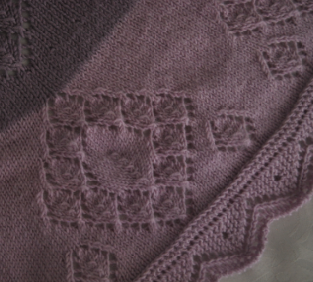
 As part of closure I decided to engage in bucket filling by making individual coffee cup holders for each of the staff members in my workplace and include a note of appreciation. 

More information can be found about bucket filling on the website: http://www.bucketfillers101.com/


Leaving systemic stress behind

During my 12 weeks leave I had begun to experience "soothing and replenishing"* after having been somewhat "burnt by the journey"* through many years of systemic stress, and found that I needed to express a myriad of emotions and to take the time to process that journey. The quotes marked with * come from an Australian adaptation of a Celtic blessing which I love. It is called "For you, deep stillness of the silent inland" by Robin Mann & Julie Perrin, and an expanded version can be found on Youtube at the following link:

However I found, during the last two weeks of my working life, that I was thrown back headlong into the many systemic sources of stress (and Mad March) and that my "bucket" was "dipped" by triggers, misunderstandings and the few people whose personal life journeys and/ or current challenges made them inclined to be "bucket dippers", and this means that I have more emotions to express and more things to process so that I can move on into the next stage of my life (I have decided that there are two separate stages at the end of life -- retirement and then old age, not just old age). I also keep reminding myself that I never have to endure any of this systemic work stress again.

As a final closure to systemic stress I composed a humorous list of things I won't miss (all non-people things  that annoy most of us), accompanied by appropriate clip art pictures, and ended it by saying that I will miss all my wonderful colleagues, as it is the people make the service function and give it quality.I emailed this to everyone in my workplace shortly before I left my office for the last time (now bereft of keys and ID badges), and removed my name from my pigeon hole and the whereabouts whiteboard.


The dangers of re-opening doors

Prior to my 12 weeks leave I had gone to a great deal of conscious effort to achieve closure with my clients by reflecting on progress, referring them elsewhere if needed and discussing options for future support and/ or counselling (and saying goodbye). I returned for 2 weeks in order to plug a gap in, and finalise, clinical supervision and other senior tasks, and to do a final clean-up of my office.

Thus it was totally inappropriate for me to engage with new clients, as it was unfair on them to open up issues and then abandon them -- and there were others who could provide a counselling service for them. Clients do tell us that they don't want to repeat their stories over again to new workers.

However other non counselling staff were unable to understand this and tried to force me to engage with new clients -- and I began to feel quite distressed. On reflection, I realised that this was because they were asking me to re-open a closed door.


I will always be a Social Worker

I know that I will find occasions in the future where I can still use my counselling and Social Work skills, but they will be in a different context, and I started this blog so that I can retain this part of my identity.




Tuesday, 24 March 2015

Thou shalt not be perfect

Adding on to the last post on "Mistakes as opportunities", I thought this was very appropriate. I was unable to find a source -- I think it is one of those things that has just continued to be passed on and on, but if anyone knows otherwise I would be grateful if you let me know.

Thou shalt not be perfect nor even try to be.
Thou shalt not try to be all things to all people.
Thou shalt leave things undone that ought to be done.
Thou shalt not spread thyself too thin.


Thou shalt learn to say "NO".
Thou shalt schedule time for thyself, 
                       and thy supportive network.
Thou shalt switch off, and do nothing regularly.


Thou shalt be boring,untidy,inelegant 
                       and unattractive at times.
Thou shalt not even feel guilty!
Especially thou shalt not be thy own worst enemy,
                      but be thy best friend.


30/3/15 Addendum
A good friend has provided me with more information. Apparently these were written by Hilary Langford, who is a management consultant and has a website: www.hilary.com.au 

Amanda Gore has provided an expanded version on her blog: http://amandagore.com/10-commandments-for-reducing-stress/


Thursday, 19 March 2015

Using mistakes as opportunities

We all make mistakes from time to time, but what really matters is how we deal with them. We can simply correct them and move on (which is often the appropriate action) or we can use them as opportunities to further enrich our lives.

Learning opportunities

Throughout my life some of my best learning has come from making mistakes, as a deeper impression is left afterwards, about the better way to undertake things, than if I had done things correctly in the first place. For instance, years ago as a student on a Social Work Practicum at Centrelink, I learnt a lot from handling a drunk and abusive client inappropriately, and have used this learning in interacting with difficult people since then.


Creative opportunities

Correcting mistakes can lead to new creations, and I've always wondered how many knitting stitches have been invented this way. An initially wrong hypothesis about a client can lead me to explore aspects of their lives that otherwise may not have been covered, adding additional information to work with, as a new hypothesis is formed.


A metaphor from nature

The Walls of China in Mungo National Park in western NSW are considered an amazing natural attraction, and yet they would not exist if people in the past had not made the mistake of running sheep in fragile land, thus causing massive erosion. Nature then took the erosion and formed a remarkable landscape.


A great little book

Beautiful Oops by Barney Saltzberg is all about turning things like torn pages, dog eared pages, splotches, holes, scrunched up paper, and other imperfections into new creations. It is especially good for those who are inclined to be perfectionists.


What opportunities can mistakes bring for you?


Tuesday, 17 March 2015

Happy World Social Work Day

Today is World Social Work Day.

Celebrating diversity

With images from Singapore.


No act of kindness, no matter how small, is ever wasted (this was in a children's playground)


Friday, 13 March 2015

Perspectives

Rather than being about right or wrong, situations and events usually have numbers of perspectives. However, conflict often arises when people advocate for what they believe to the right or wrong from one perspective only.

Opening up to more perspectives

I have always loved the old story about the six blind men and the elephant, and it can be found here: http://www.jainworld.com/literature/story25.htm .

Basically six blind men, who have never seen an elephant before, go to "see" one when it comes to their village. However they each feel a different part e.g. one feels the ears and says the elephant is like a fan, one feels a tusk and says it is like a solid pipe, another feels the trunk and says it is like a tree branch, and so on. They then argue with each other about what an elephant is like. Interestingly, none are wrong, but the morale of the story is that they need to put all their descriptions together to gain a more complete picture of the elephant.


We too can actively seek more parts to stories, situations and events so that we can gain a broader perspective of what is really going on.

Some useful tools

1. The Conflict Resolution Network lists broadening perspectives as one of its conflict resolving strategies and encourages people to ask "Am I seeing the whole picture, not just my own point of view?"  For more information of this go to :
http://www.crnhq.org/pages.php?pID=12#skill_12

It also has another strategy called "Mapping the conflict", where the needs and fears of all the parties involved in an issue can be documented, shared and discussed.
This can be found at:
2. De Bono's Thinking Hats can be used to consider a number of aspects around the resolution of an issue (either individually or in groups). The aspects include information (known or needed), feelings,hunches and intuition, judgement and creativity (possibilities, alternatives and new ideas), and finally putting all these together (thinking about thinking). An outline is available at:
http://www.debonothinkingsystems.com/tools/6hats.htm


3. Using Narrative Therapy. This is a complex technique based on the notion that different narratives can be woven through client's stories (but this is an extremely simplistic description). More information can be accessed from the Dulwich Centre at:
 http://www.dulwichcentre.com.au/what-is-narrative-therapy.html

Working with the client's perspective

In respectfully listening to the client's story (an essential beginning to any therapeutic intervention) we are hearing their perspective on their life and its events, and this is what we need to work with 
(even if we are feeling sceptical about it). We can work with it in various ways, but not until it has been fully heard and they have felt understood.


Wednesday, 11 March 2015

Mad March and full moons

For many years myself and many colleagues have believed that we have noticed a correlation between increased referrals and more fragile clients around full moons and during the month of March.

History and scientific evidence

According to Wikipedia:
The Ides of March is a day on the Roman Calender that corresponds to 15 March. It was marked by several religious observances and became notorious as the date of the assassination of Julius Caesar in 44 BC.
Apparently the word "beware" was attached to the phrase centuries later when Shakespeare used it in his play "Julius Caesar".

The belief about the impact of the moon on human behaviour goes back to the Roman scientist and military commander Pliny the Elder and has continued ever since (as stated by Dr Karl Kruszelnicki in his article "Can a full moon affect behaviour?" which can be found on ABC Science  http://www.abc.net.au/science). He goes on to state that there is no scientific evidence for the moon's effect on human behaviour, and gives other explanations for the beliefs.

The strength of beliefs

However beliefs, rather than facts, play a major role in how we and our clients choose to live our lives.

Strongly held beliefs are often linked to emotions rather than logic, and we will usually recruit evidence to the belief. The website "Changing Minds" has more interesting things to say about beliefs especially in relation to their strength and type (www.changingminds.org)


Changing unhelpful attitudes and beliefs

Some beliefs are unhelpful (but we need to be careful how we decide this). If they need to be gently challenged, these are some useful strategies I have found:

1. An essential part of our role is to have access to accurate and up to date information to pass on to our clients, as they may have been misinformed by popular beliefs or inaccurate information passed on by others, especially when it comes to legal issues (and Family Law in particular). Accurate information can have an impact on changing unhelpful beliefs.

2. Years ago I attended a Core Domestic Violence Train the Trainer session, which was very much based on ways of changing attitudes around Domestic Violence. One of the things that impacted on me was the idea of encouraging people to sit an old belief next to a new one to see how this impacted, rather than persuading them to give up the old belief. I have used this since with clients in all sorts of contexts, as I find it to be a respectful rather than a confronting intervention.

3. The thoughts, feelings and behaviours triangle and how each of these impact on the other. The theory here is that, by changing one, then the others may change. Beliefs are, after all, thoughts.

Enriched lives

So, is the belief in Mad March and the impact of Full Moons on human behaviour unhelpful? This is an individual decision. What richness we would lose from our lives if we only lived by scientific facts.

Monday, 9 March 2015

Honouring survival strategies

People living with abuse use an amazing array of survival strategies.The tool outlined below is one I have used for many years to help clients honour the use of these strategies.

A useful tool/ metaphor

One of my clients prompted the development of this tool when she told me that when she returned home to her abusive husband, she would don a metaphorical cloak as she walked through the door.

I have a Babushka doll that I use to represent the client, and I have made a black cloak for the doll.


I lift off the outer doll to reveal an inner doll and explain that we sometimes use survival strategies that are true to our inner selves and that we feel proud of.


I then talk about how the black cloak represents the survival strategies we may have used that we are not proud of. I discuss that we may have had no other option at the time, as this was the only way we could see to stay safe. I further extend the metaphor to say that the survival strategies represented by the cloak do not become part of our inner selves and that the "cloak" can be donned as needed, worn for as long as required, and removed at any time when we are feeling safer.


We then discuss how the use of all strategies needs to be honoured.

Another tool to extend this discussion

It is useful to explore the strategies used in relation to the different types of abuse, and I developed this tool to use in one of the sessions of a Women's Support Group I was facilitating.

Here is the table I developed to summarise the women's ideas, but it could be also used effectively with individual clients.

Applying this to the workplace

Can you see ways of modifying  these tools to use in relation to work pressures and stress as well as bullying in the workplace?


P.S. It is not a good idea to pull apart and wash a Babushka doll, as the wood swells and then the dolls can't be put back together again!