Saturday, 11 January 2020

Grieving for losses: fire in Croajingolong National Park below Mallacoota, Victoria

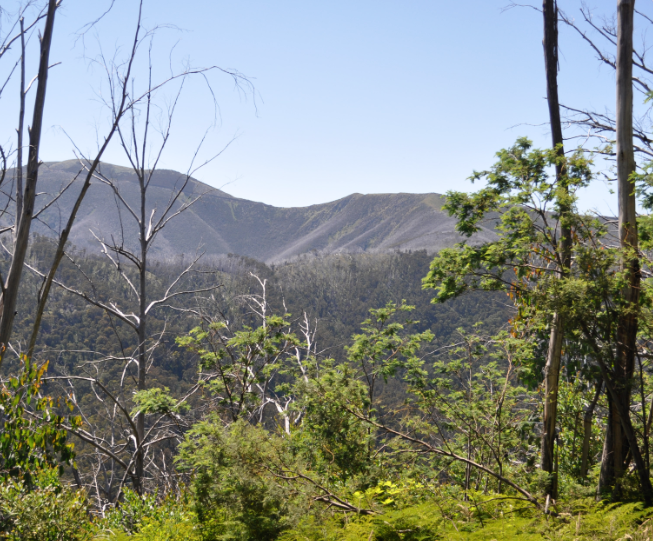
We have visited the Mallacoota area on several occasions as it is so beautiful, and a place we love. It is very sad to see that the whole of the southern part of the Croajingolong National Park from Mallacoota to Point Hicks has been burnt out, and right up to the coast.

Here are diary entries and photos from our travels in this area to honour the current losses.

 We negotiated the 4WD track to Shipwreck Creek through coastal forest of tall trees with spindly trunks under-storied by Ti-tree. From Shipwreck Creek car park we walked 500 metres down a bush track to the small beach, negotiated over some rocks at the edge of the evil-smelling creek (rotting seaweed) and tramped across the beach to the track to Seal Creek. After traversing this for 200 metres through dense Ti-trees and long native grasses we turned back and enjoyed the beach, watching the waves break into a small side cove to briefly cover its rocks with frothy foam before it was sucked back into the ocean, only to be returned again by the next wave. We shared the beach with some intrepid walkers laden with large back packs and two bikini clad young ladies romping in the waves.


After returning to the Cruiser we backtracked to the turn-off to Pebbly Beach and briefly visited this not very attractive and deserted beach, clambering a little way around the headland for views of Gabo Island and the border area of the coast before returning and continuing to backtrack towards Mallacoota.


Our next stop was Secret Beach where the only indication at the car park that there was anything of interest here were the four parked 4WDs. After joining them we discovered a sign at the beginning of the walking track informing us that this was indeed Secret Beach. Descending the well formed steps took us to a beautiful beach which had been discovered by a cricket-playing contingent, two fishermen and a woman with two dogs and two small children. One small child alerted us to the presence of a large sea cave on the point as she ran and disappeared into it. We followed and explored it at leisure, dodging waves on the outside, before trudging back across the beach to sit briefly before random spots of rain sent us back up the steep steps to our vehicle to return to Mallacoota as the drops became heavier.


We travelled back out to the Princes Highway, viewing the scenery through a windscreen covered with tiny raindrops (John does not believe in turning on the wipers until it is almost impossible to see). The occasional veil of gauze-like mist added to the atmosphere. To me, this much more suits the mood of a forest than would a bright sunny day. 

On the highway we were slowed by caravans and the V-Line bus but the forests were enchanting, the rain had ceased and we soon reached the West Wingan Road which took us 34 kms down to the inlet along a relatively rough and pot-holed dirt road with sections of blue-metal gravel decorating its surface. Many of the side tracks of this road were closed with the exception of the Wingan Link Road, Cicada Track, Gale Hill Track and the Boundary Track and we only passed three other vehicles (going in the opposite direction) as we gently wound our way downwards through the forest. Nearer the inlet the ground became sandier, not surprisingly!


We arrived at the camping area, located the boat launching area on the edge of the inlet, set up and packed our kayak and paddled for 4.6 kms up the inlet and Wingan River. This was fairly wide most of the way, taking us through forest which came right down to the water’s edge and past a remnant of rainforest right near the rocks of the rapids where we could paddle no further, as the river was completely blocked by rocks where the much narrower river formed small cascades. The rocks proved to be a challenge as we negotiated the submerged ones in order to find a landing spot, but we eventually succeeded and ate our lunch on the rocks, accompanied by a lizard and watched by a small dark blue bird with a reddish-brown breast perched in a nearby tree. A little further back Jungle Creek could just be discerned emerging through the tangled growth and into the river.


On the way up we had lost one of John’s paddle blades when it became unscrewed and fell off, initially floating but then sinking before we could retrieve it. All the way fish frequently jumped out of the water, intriguing us as to what type they were. We paddled back to our starting point, once again encountering the young folk paddling a canoe near the beginning of the inlet under the watchful eye of their mother, packed our kayak away and took the 3km return walk out to the mouth of the inlet.


This took us downwards then along the edge of the inlet, following it through unspoiled native forest teeming with varieties of plants and across boardwalks that cut though thickets of Paper-barks and Coast Sword Sedge (the plants with stems like Grass-trees that we had seen yesterday). The track took us around the inlet until we crossed a tiny dune and came out on a beautiful beach.


This was still quite some distance from the mouth of the inlet so we trudged along the sand, watching the feathery waves reach out towards us and then recede and clearly seeing seals on the Skerries rocks just out from the inlet. The inlet proved to be wide and deep with swiftly flowing water which some brave souls were swimming across. All thoughts of wading its width evaporated and I took on board that this would be a very challenging section of the long walking track that follows the coast!


We sat awhile drinking in the beauty of the inlet. which was lined with orange-tinged rocks, and the long beach where forests met the sea before returning along the track to our Cruiser and driving back to Mallacoota through light rain. We crossed Wingan River much further up  the highway.

Remember: In the end, only three things matter: how much you loved, how gently you lived, and how gracefully you let go of things not meant for you. Buddha


Friday, 10 January 2020

Grieving for losses: Fire in Victorian High Country from Mt Hotham to Omeo

We have all been horrified by the extent of the current bush-fires, and rightly so. Many others are looking onwards and encouraging the supporting of recovery processes, but I want to pause and acknowledge the losses in some of our most beautiful National Parks. I thought I would do this by sharing photos and diaries of our visits to these places in past years, so that we can be reminded of what has been lost for now, and of how they might look again after regeneration.

I have chosen the Victorian High Country as my first tribute, as my youngest daughter works at Mt Hotham and has had to evacuate to Albury.

In January 2011, we stayed at Mt Beauty and, whilst there, took a day trip along the Great Alpine Road from Bright to Omeo.

The road took us upwards through alpine forests (still featuring the bright bike gear of the ever energetic cyclists), where tall trees clung to the sides of sheer drops and we were tossed from side to side like ships on a stormy green ferny sea. but the views were amazing, with mountain ranges parading across the deep, deep valleys from a road that was all corners and clung tenaciously to the edge of the mountain.


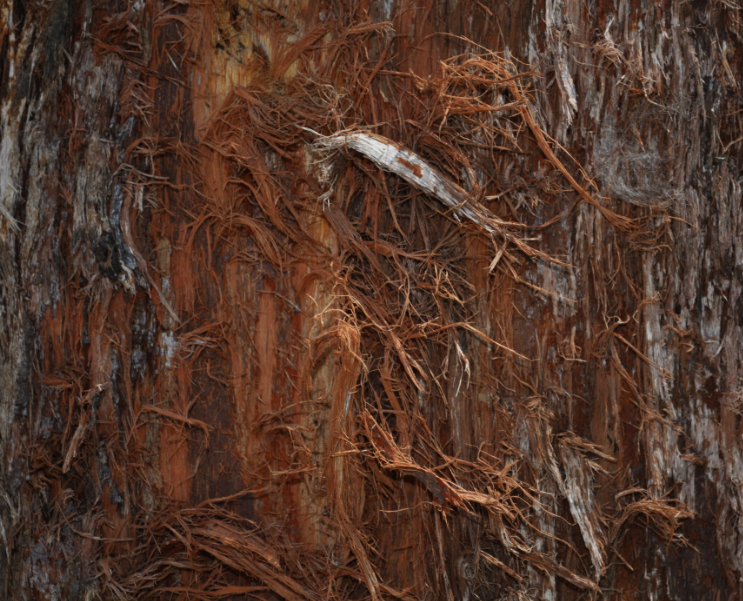
A picnic area on a hairpin bend provided an opportunity to pause and take in the scenery, and here we were introduced to the Woollybutt with its furry looking orange trunk (and apparently it is Australia's tallest flowering tree). Another couple of small roadside pull over areas allowed for some more photos -- but nothing that could come close to doing justice to this "oh wow" spectacular scenery.


We passed over Mt St Bernard and then climbed Mt Hotham amongst mountain scenery that could only be described as superb (if I don’t want to use that “spectacular” word again)! At Danny’s Lookout we experienced refreshingly cold winds, but realised that we had passed the Blue Rag 4WD Trail. So we retraced our steps to Saint Bernard’s Hospice Hut to take the Dargo High Plains Road, which immediately took us down a little ways to then wind for 12 kms around the mountain and along a ridge top through deceased Snow Gums, which stood sentinel to the new growth beneath them, until we reached the Blue Rag Range Track.


This track truly lived up to its iconic status, taking us initially down a steep incline into a saddle and then just as steeply up the other side before winding through Snow Gum forest to an intersection, where we continued onwards to climb on upwards across alpine meadows to the trig point. The last few knolls featured parked vehicles whose owners had chosen to walk, but we continued on in ignorance to a totally hair-raising section called “The Staircase” – a very steep and very rocky section with sheer slopes falling off both sides of the track and no place to turn around and chicken out. I was truly terrified. 


The journey back out to the Dargo High Plains Road was less exciting (except when I chose to walk down “The Staircase”, finding this a real challenge on crumbly loose rocks and at an incline that elsewhere would require a walking track staircase), and we made it unscathed back to the tar to return to Mt Hotham and then travel further on to the alpine village of the same name (for a brief stop).


After this, the Great Alpine Road took us past Dinner Plain Alpine Village and gradually downwards, even though orange snow poles still edged the side of the road. Flour Bag Plain (an open area surrounded by Snow Gum forest) did feature a huge lump of white quartz, but we did not stop even when we reached Victoria River, where we turned off onto side tracks to search for Victoria Falls.


A narrow dirt track took us initially through fairly tame countryside but then winding around a mountainside where one side fell steeply and deeply to the narrow valley floor far below. When we reached the remains of an old pondage, a map on a small information board told us that we had come too far, and the lookout over the falls was back along the track. And, lo and behold, soon after we turned around, we could see the falls from the road and, further along, a short unmarked walking track did take us to a makeshift lookout point. 


As always, the road out seemed much shorter than the inward journey and now I could enjoy the small babbling creek which we followed for a while. We re-joined the Great Alpine Road and zoomed towards Omeo across very undulating pastures as mist descended and the temperature cooled. In fact it was quite cold when we stopped in Omeo to purchase tea (knowing that we still had about 100 kms of twisting mountain roads to navigate before we returned to Mt Beauty).


As we climbed up the Omeo Highway the mountain ranges were softened by mist and their tops were concealed in cloud cover – and I never cease to be amazed at the number of roads and tracks that have been constructed through this otherwise almost inaccessible High Country.  At tiny Anglers Rest we crossed the Cobungra River and then passed a series of camping areas alongside mountain streams which promised excellent trout fishing, and then later followed the Big River.

Shortly after the turn off to John’s Flat we turned onto the Bogong High Plains Road which took us higher above the forests of tall trees and onto the plains, where cattle grazed in occasional clearings between forests of more stunted trees, that have probably felt the touch of snow. But, surprisingly, taller trees reappeared higher up – perhaps on a more sheltered range, and these continued until we were still much higher and back amongst the Snow Gum forests, alpine meadows and into the clouds, which drifted across our path in transparent veils of white to obscure the distant vistas when we reached the land, that was all alpine meadows, just before Falls Creek.

Here we paused briefly at Rocky Valley Dam to capture a different mood on camera (and to allow John to give the Cruiser yet another drink – a monotonously regular occurrence all day and especially since Omeo).


The road down to Mt Beauty from Falls Creek was crossed with shadows from the forest which filtered the light from the lowering sun and made for trickier driving conditions. So it was after 7.15 p.m. before we reached our caravan – a long day’s drive, requiring a short stroll by the river to stretch our legs before retiring inside.

Remember: Caring for your body, mind and spirit is your greatest and grandest responsibility. it's about listening to the needs of your soul, and then honouring them. Kristi Ling


Thursday, 9 January 2020

My year of healing: part two: saving the planet

Last year I set an intention for the year to work towards healing and, in the previous post I shared the resources I used to help with personal healing from childhood issues. In this post I would like to share the helpful resources I have found in my journey towards less waste and less plastic in my life.

I have taken the approach of gradually implementing permanent changes, rather than doing nothing because it is too overwhelming, or doing too much at once so that it is not sustainable. Taking consistent action, no matter how small, takes away the sense of helplessness and hopelessness that can threaten to engulf us when we despair about the state of our world.


Less waste

Lindsay Miles has a very informative blog called "Treading my own path" and, during the year, I enrolled in her course "Wasteless", thus freeing myself up from conflicting information on the internet. I learnt lots about recycling, composting and other ways to reduce food waste, how to shop for, and store, food without plastics, and how to substitute plastic in the bathroom and laundry (including recipes for making home-made products which work e.g. she points out that if you mix bicarb soda and vinegar they cancel each other out and you end up with salt water -- yet many on-line recipes erroneously combine the two). She also included many links to reputable on-line businesses that support the Zero Waste movement.

Her blog can be found here:


Recycling

We have no garbage service to our farm and have to take it all to our local tip, which only provides for land-fill. However, encouraged by the "Wasteless" course, I did some local research and discovered that we can deposit recyclables at the Waste Management Facility in our nearest town (without charge), so now we collect them and do just that. I also discovered that all Coles stores have Redcycle bins for soft plastics, and that these take a large variety of soft food packaging. For more information, here is a link to their Website:

There are also many other things that can be recycled e.g. Aldi collects used batteries, the Post Office takes used ink cartridges and Telstra collects old mobile phones. Planet Ark has information on where many other items can be recycled, and their Website can be found here:


Decluttering

Having taken on board the concept that if something is not used, and is just languishing in a cupboard, it is waste, I bought a book on cleaning and decluttering, "Real Life Organising" by Cassandra Aarssen, as I liked her approach that one size does not fit all. This then led me to her Website "ClutterBug", which provides resources and a fun approach to cleaning and decluttering, although she is not into Zero Waste or plastic free living. This is the link to her Website, but scroll down past the ad for her course, to find lots of free resources:


Plastic substitutes

I have found it useful to list all the plastic items I use and to gradually replace them with non-plastic items as they wear out. Otherwise it is kinder to the planet to keep using them rather than offloading them and buying new items. However I have moved food items into glass jars, and made sure that I save glass jars and bottles, which I have been more conscious if using.

When it comes to single use plastic, however, I have progressively worked towards eliminating this by taking my own reusable shopping and produce bags with me (some live in my hand-bag) and refusing plastic shopping bags wherever they are offered, taking my own container to the butcher for meat, visiting Bulk Food stores if we are in larger towns, shopping at Farmer's Markets, and sewing substitutes e.g. snack bags, bread bags, shopping bags, cloth napkins, food covers etc. There are many patterns on the internet and Pinterest is a great source of ideas.


Cooking from scratch and making my own cleaners etc

I have had a long history of mostly cooking from scratch, so it was not difficult to increase this to include finding home-made versions of things like chicken stock, vanilla essence, sauces, jams and preserves and the like and, in this endeavour, I have been inspired by the blogs of others like:

Stay Home Instead

The Make your own Zone

Live Simply Me

When it comes to cleaners and personal products, I have found that it pays to seek reputable information, and a great site I have found for soap making and lotions is:

The Nerdy Farm Wife


Having a focus on giving

One of the strategies that has helped me in my journey through healing has been to focus on others instead of just on myself. I have made a point of reflecting, at the end of each day, on what acts of giving I have accomplished that day, and written these in my diary. This reminds me to keep this strategy alive, and works to increase my confidence and belief that I am an OK person.

Acts of kindness and giving to others also makes our planet a better place.


Remember:Constant kindness can accomplish much. As the sun makes the ice melt, kindness causes misunderstanding, mistrust and hostility to evaporate. Albert Schweitzer


Thursday, 2 January 2020

My year of healing: part one: personal healing

In January last year I came across the concept of setting intentions rather than goals, with encouragement to choose an intention word for the year. My choice was "working towards healing" (as I felt that "healing" on its own would put too much pressure on me). I also broke this into two parts: personal healing, and healing the planet.

As I now reflect back on 2019, I can see the progress that I have made in both areas, and the wonderful resources I have been led to along the way. These are the resources I would like to share now.


Mindfulness Courses

Having discovered the Left Brain Buddha Website and Blog the previous year, I was delighted when its author, Sarah Rudell Beach offered a free course "Love your 2019" in January, which encouraged looking at our values, practising gratitude, self care, grounding, forgiveness and intentions, as well as meditation exercises and the basics of Mindfulness. I followed this with another of her free courses: "Mindfulness 101" before deciding to delve deeper and pay for her "Brilliant Mindful You" package. 

All of these have been of great benefit to my journey through personal healing from childhood issues, and I have valued the abundant resources generously offered on her Blog and Website, which can be found at: https://leftbrainbuddha.com


Meditation Resource

Left Brain Buddha led me to a great source of hundreds of free Meditation Exercises, and I have formed a new habit of starting each morning with ones I have bookmarked. Over time I have found that I have become calmer, less anxious and more laid back. This source is Insight Timer, which can be accessed here: https://insighttimer.com


Gratitude App

Gratitude Happiness Journal is a free app for i phones and includes the ability to write a daily gratitude entry (and to illustrate this with a photo), daily affirmations, and other functions (which I have not really used). I was making this a daily evening habit, but now have so many entries that I add them less frequently. However I now have an instant resource on my phone, which I can access when I need to be reminded of the positives in my life. The App can be found at:

I also happened upon a lovely Gratitude Journal by Melanie Spears, as I glanced in a shop window in Dubbo, when we were returning home from one of our visits to grandchildren, and managed to order this year's version from Booktopia. Each day allows for multiple entries of things we are grateful for and has pages for the setting of intentions for the month, and all the pages are beautifully illustrated. I have kept to a daily practice of recording the things I am grateful for, and have found this to be very helpful too. The original home of the diary is here: https://givingthanks.com.au


Abuse from a Narcissist

Insight Timer led me to some Meditations by Katharine A Chestnut and, in particular, one that reflects on how a Narcissist Abuser can steal our song of self-confidence, as they have no song of their own. I have found this metaphor to be extremely helpful when dealing with my mother, who still tries to steal my song, as she had done for most of my life. This Meditation is titled "When did you stop singing", and I am intending to pursue Narcissistic Abuse further this year so that I can gain further insight.


I hope that if you read this blog, you will find some of these resources helpful. I would love to hear your thoughts on them.

Remember: Hope smiles from the thresh-hold of the year to come, whispering "it will be happier...." Gratitude App.